Culinary journey · three moments · one country explored through food
I did not try to fit Afghanistan into a single themed day. The experience unfolded in three separate moments: a quiet study snack with black tea, a large dinner cooked for my family, and a later afternoon spent making Mantu from scratch. Separating the dishes gave me time to notice each one instead of rushing through a checklist.
Afghan cuisine at a glance
These are the patterns I began to notice in the dishes I cooked—not a complete picture of Afghanistan’s diverse cuisine.
FLAVOUR PROFILE
Aromatic rather than overwhelmingly hot: cumin, coriander, cardamom, turmeric, cinnamon and dried mint.
IMPORTANT FOUNDATIONS
Rice, bread, meat, yoghurt, onions and fresh herbs shaped the dishes I prepared.
CONTRASTS
Savoury food is balanced by something sweet, tangy or fresh — like raisins with Palaw or yoghurt and tomato sauce with Mantu.
AROUND THE TABLE
The dishes made the most sense when shared: bread, rice, sauces and sides coming together as one meal.
My Afghanistan moments
1. A study snack and black tea
The first moment was small and practical: dates, dried apricots, almonds and pistachios with black tea while I was studying for an exam. I liked how steadily the snack kept my energy up. The dates tasted especially good, and the whole plate felt far better than reaching for random processed snacks.
Open the snack plate & tea recipe →
2. A large dinner with my family
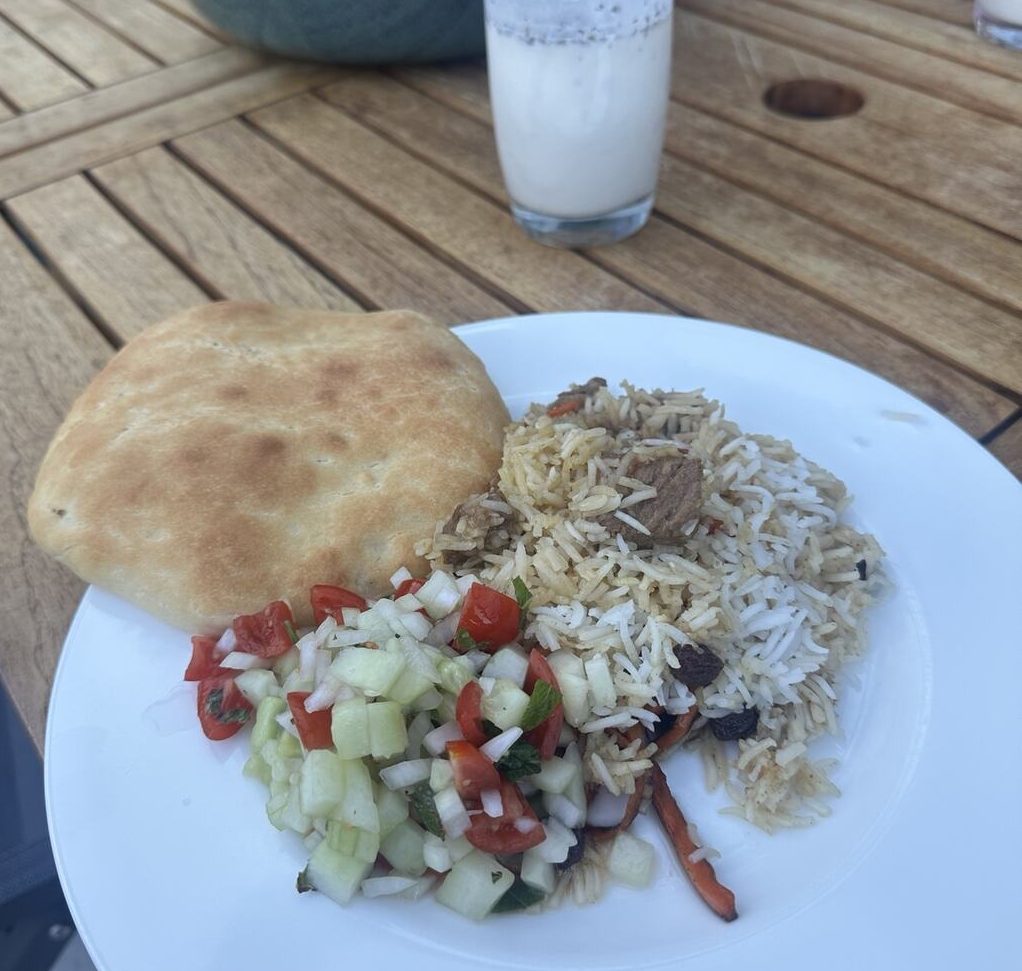
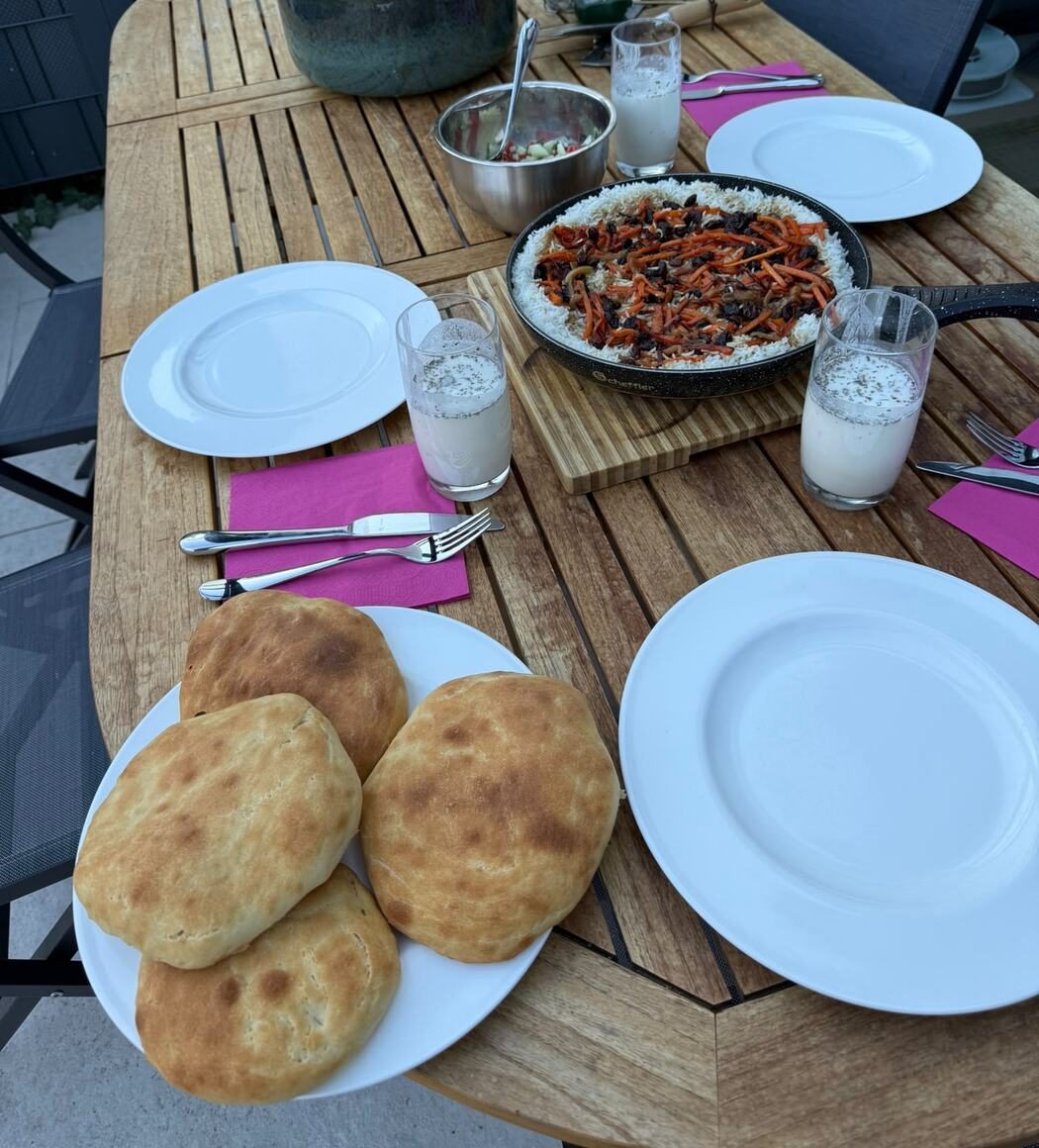
The main cooking evening brought together Kabuli Palaw with beef, homemade Naan, fresh Salata and Doogh. Time and coordination made the evening intensive, but the individual recipes were surprisingly uncomplicated. My timing worked flawlessly, even though there was always something to do.
Kabuli Palaw was deeply savoury. The beef cooked for more than an hour until tender and created a broth that the rice absorbed. The caramelised carrots and raisins completed the dish: their sweetness rounded everything out and turned it into a real explosion of flavour.
The Naan was another highlight. I had been sceptical because the dough was very soft, yet it handled well on the tray, rose beautifully and came out fluffy inside. Salata added fresh lemony acidity. Doogh was pleasant and strongly yoghurt-forward, although not something I need to drink often.
3. Mantu from scratch
Mantu came on a different day and became my favourite. I made the dough and beef filling myself, then served the steamed dumplings with yoghurt and tomato sauces.
The cool, tangy yoghurt sauce and warm tomato sauce worked surprisingly well together. Mint, coriander and cumin brought everything together, while the sauces added exactly the juiciness the comparatively dry beef filling needed.
Open the homemade Mantu recipe →
Shopping and authenticity
I found everything in a normal supermarket or used supplies already at home. I did not need specialist products or major substitutions. My versions stayed very close to the recipes.
My overall review
| Taste | 5 / 5 |
| Effort | 4 / 5 |
| Price | 3 / 5 |
| Authenticity | 4.5 / 5 |
| Surprise factor | 3 / 5 |
| Would I cook it again? | Yes |
My ranking
- 1. Mantu
- 2. Naan
- 3. Kabuli Palaw
My family’s favourites: Mantu and Naan.
Thoughts
The Afghanistan journey showed me why this project works best slowly. A country does not have to become one perfect dinner. It can begin with tea beside my notes, continue around a family table and return days later in a tray of handmade dumplings.
 Anna Between Worlds